.png)
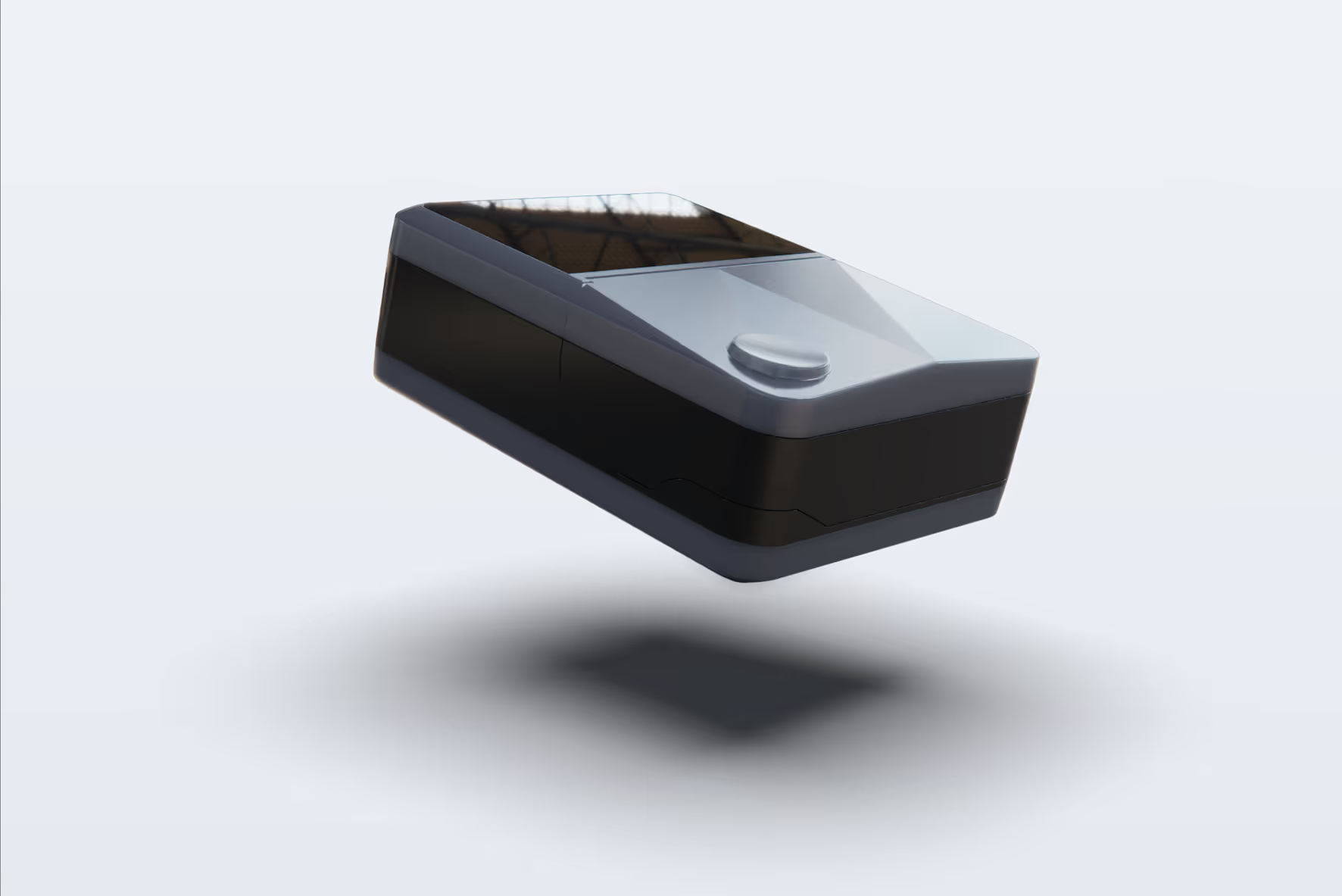
GlucoBeam Smart
TM
The problem we aim to address
Type 2 diabetes and pre-diabetes are among the fastest growing health challenges worldwide. Millions of people are affected—often without knowing it. Pre-diabetes develops silently over many years, gradually damaging the body long before symptoms appear. Understanding why this happens, and why early detection is critical, is the first step toward effective prevention.
Less than 1 out of 10 people
Are aware of their pre diabetes condition.
For 9 out of 10 people
The situation is fully reversable.
The silent rise of type 2 diabetes
Type 2 diabetes develops gradually as the body loses control of blood glucose regulation.

Early awareness changes everything
Pre-diabetes is silent but highly reversible if detected early. The challenge is that most people are never tested until it is too late.
Prevention and reversal
Regular non-invasive blood glucose measurements empowers people to take control and manage and even reverse pre-diabetes before Type 2 develops.
The Silent Rise of Type 2 Diabetes
Type 2 diabetes has become one of the most significant global health challenges of our time. Modern diets contain excessive amounts of sugar, placing continuous stress on the body’s ability to regulate blood glucose.
Glucose is a vital source of energy for the body’s tissues, but it is also a highly reactive molecule that can alter protein structures and impair their function. In individuals with healthy glucose regulation, blood sugar levels are tightly controlled, and the body continuously renews proteins and cells to manage potential damage. However, as we age, this delicate balance becomes less reliable. Blood glucose spikes (hyperglycemia) become higher and last longer. The body’s biochemical systems become less efficient at managing glucose exposure, while its ability to repair and replace damaged proteins declines.
As a result, tissue damage accumulates gradually over many years. Such damage manifests itself in the development of major diseases such as vascular dementia, loss of vision and kidney failure.
Glucose is a vital source of energy for the body’s tissues, but it is also a highly reactive molecule that can alter protein structures and impair their function. In individuals with healthy glucose regulation, blood sugar levels are tightly controlled, and the body continuously renews proteins and cells to manage potential damage.
However, as we age, this delicate balance becomes less reliable. Blood glucose spikes (hyperglycemia) become higher and last longer. The body’s biochemical systems become less efficient at managing glucose exposure, while its ability to repair and replace damaged proteins declines.
As a result, tissue damage accumulates gradually over many years. Pre-diabetes is therefore a serious — yet often undetected — condition that can progress into full Type 2 diabetes, with significant physiological consequences and the potential need for lifelong, costly medication.
Early awareness changes everything
Prediabetes now affects 98 million people in the US. i.e. one in three of the population.
It is the early warning stage that Type 2 diabetes is developing. The condition is silent but highly reversible if detected early. The challenge is that most people are never tested until it is too late and the condition has already developed into early Type 2 diabetes, eventually leading to significant physiological consequences and the potential need for lifelong, costly medication and clinical procedures (such as kidney dialysis). In a study published in The Lancet Diabetes & Endocrinology it was reported that a Type 2 diabetes diagnosis at age 30 can reduce life expectancy by up to 14 years.
The pre-diabetes condition indicates that tight management of blood glucose levels is beginning to become dysfunctional. A simple blood test can be used to identify the condition initially. Glucose and glycosylated haemoglobin (HBA1c) levels that are too high are indicative of a developing problem. Alternatively regular non-invasive measurement of blood glucose levels after fasting periods can confirm that blood glucose regulation has become dysfunctional.
Prevention and reversal
Once identified reversing the seemingly inevitable progression to Type 2 diabetes is of critical importance. It is here that non-invasive measurement techniques provide such a valuable tool to track and manage the condition. Overcoming the understandable resistance to regular blood tests using finger stick test strips or continuous monitor patches means that individuals can track and manage the condition much more successfully.
Regular monitoring can then be combined with certain simple interventions that are highly beneficial, such as dietary changes, stress reduction, and physical activity.
A key paper from 2022 published in BMJ Open Diabetes Research & Care showed that lifestyle interventions are highly beneficial:
For example ~93% of participants who initiated lifestyle intervention within 3 months to 8.3 years of developing pre-diabetes did not progress to diabetes and ~43% reverted to normal glucose regulation.
Disclaimer: GlucoBeam TM is an investigational device and is not approved for commercial use in the U.S. or any other jurisdiction.
Referencer: Yale MedicineUniversity of Cambridge BMJ Diabetes Research
GlucoBeam Smart TM
Enabling Early Insight into Glycemic Health
Using light instead of needles, GlucoBeam eliminates the barriers for regular measurements in people without diabetes.
We envision that GlucoBeam will help raise awareness of glycemic health in the broad population and facilitate that more people can take control of their metabolic health.